
Home / Research / China drops to No.3 US trading partner…

China drops to No.3 US trading partner…

At the end of May we prepared this essay on the changing probabilities in Trump’s trade war, which explained that the end-game for many in Washington was, in fact, no deal. The goal was, on the contrary, the imposition of widespread tariffs on all Chinese exports in order to shift US supply chains out of that market, which is now considered an existential national security threat.

The WSJ reports that the trade war has indeed had this effect, with China slumping from No.1 to No.3 in the rankings of the US’s key trading partners with Mexico and Canada rising in her stead (see chart below).

After a brief thaw in China-US relations over June and July, animosities have resumed in August following Trump’s decision to unilaterally apply a new 10% tariff on the remaining $300bn of Chinese exports that were not being taxed, which now seems sure to come into effect on 1 September.

China duly responded by blocking all US agricultural imports and allowing a modest depreciation in her otherwise pegged Yuan exchange rate, which Trump and the US treasury promptly slammed as “currency manipulation”, potentially presaging even more punitive tariffs.

Ironically, the consensus had been that China has been maintaining an artificially elevated exchange rate to thwart capital flight and avoid incurring the wrath of its US critics (ie, the Yuan would be a lot lower were it not for Chinese interventions).

Markets are now grappling with the juxtaposition of interest rate cuts from the Fed and the ECB in September, and the prospect of far-reaching ECB QE, balanced against the renewed headwinds to global growth precipitated by this ongoing dispute.
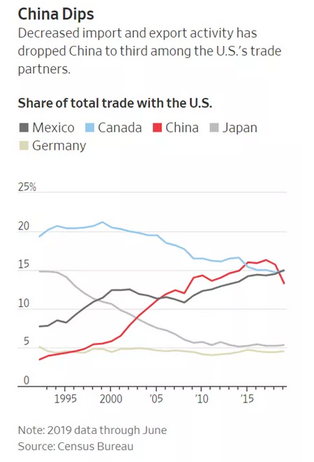
China Dips

More News

Complexity Premia Podcast, Episode 76

Chris and Ying Yi unpack the Fed and RBA outlook, April portfolio performance, and where yields sit across fixed-income markets before turning to the escalating Iranian conflict and Australia’s 12 May Federal Budget. They assess how markets reacted, what the budget means for investors across housing, CGT and broader asset classes, and why Australia’s productivity problem, fiscal choices and capital flows could shape returns well beyond the next rate decision.

Complexity Premia Podcast, Episode 75

Chris and Ying Yi break down what rates markets are pricing in Australia and the US, and what that implies for housing, the Aussie dollar, and broader asset valuations. They assess the market impact of escalating conflict in Iran, where capital is flowing in periods of stress, and which assets are proving resilient. The discussion then turns to positioning—how to think about risk, where to hide, and where the most compelling opportunities are emerging in an increasingly volatile global environment.

Complexity Premia Podcast, Episode 74

Chris and Ying Yi challenge the Reserve Bank of Australia’s claim that policy is “close to balance,” arguing the data instead point to a persistent inflation problem driven by excessive fiscal spending, ultra-low unemployment, and years of overly easy monetary policy. They explain why the RBA may ultimately need to lift rates well above market expectations, why global inflation risks remain underpriced, and how AI capex, energy shocks, and Trump’s economic strategy could reinforce a higher-for-longer rate environment. The discussion concludes with the investment implications: avoid default risk, prioritise liquidity, and recognise why cash and high-quality bonds may now be among the most attractive assets available.

Complexity Premia Podcast, Episode 73

In this episode, Chris and Ying Yi run a top-down markets scan: recent performance and the outlook for yields, how hyperscaler AI capex is feeding into bond supply, inflation expectations and term premia, and where value is emerging across major asset classes. They cover the next moves from the RBA and the Fed, implications for housing and growth, and whether AI ultimately proves disinflationary. The conversation closes with the cross-asset tells—USD, gold and bitcoin—and what they’re signalling for the year ahead.
Scroll to Top
Scroll to Top